
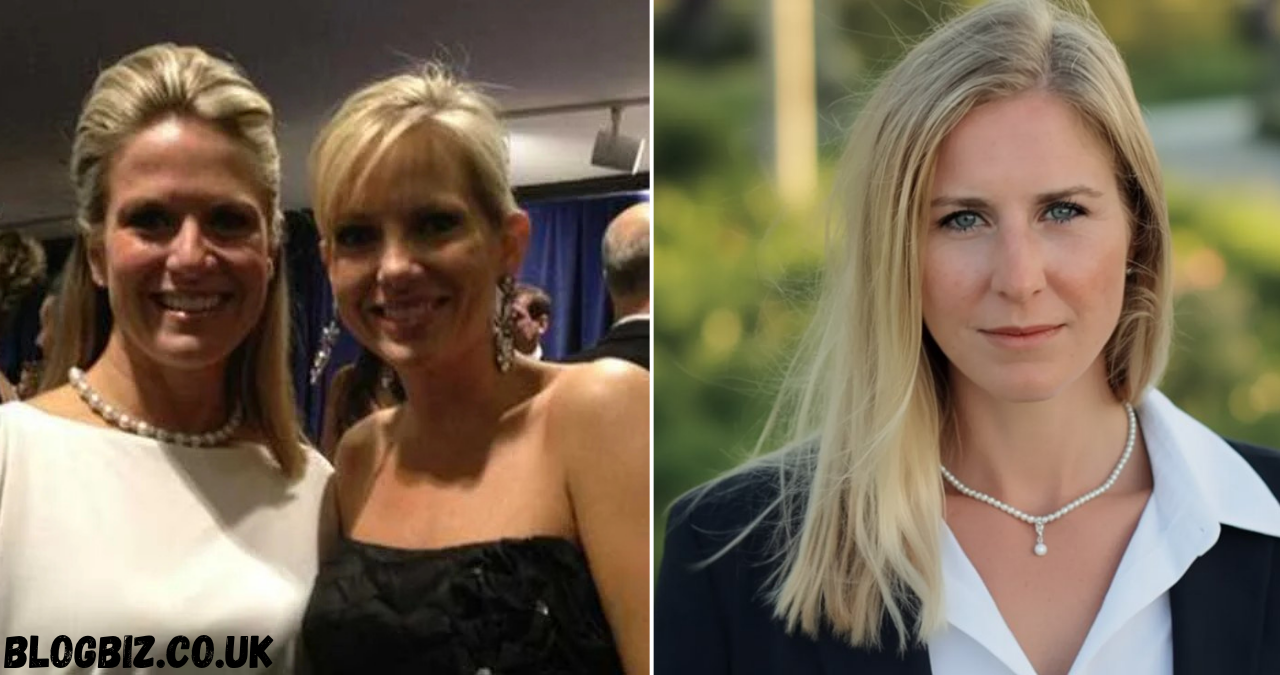
Elizabeth Bowes Gregory is a name that surfaces intermittently in genealogical discussions, historical records, and fragmented family trees, yet remains shrouded in ambiguity. Unlike widely documented historical figures, she does not appear with a single, clearly verified biography in mainstream historical archives. Instead, her identity often emerges from overlapping records, naming conventions, and possible family lineage references that require careful interpretation. This makes her an intriguing subject for genealogists and history enthusiasts who specialize in reconstructing incomplete narratives from limited evidence.
In many cases, names like Elizabeth Bowes Gregory represent a convergence of family surnames rather than a singular, easily traceable identity. The combination of “Bowes” and “Gregory” suggests possible marital, maternal, or hereditary linkage, a common practice in historical naming traditions among certain social classes. However, without definitive records, it becomes difficult to assign a single, accurate life story to the name. This ambiguity is not unusual in historical research, especially when dealing with records from centuries past where documentation standards varied widely.
The purpose of exploring Elizabeth Bowes Gregory is not necessarily to confirm a fixed biography but to understand how historical identities are constructed, preserved, or lost over time. Her name serves as a case study in genealogical complexity, where history, memory, and archival gaps intersect. By examining her possible background, family associations, and historical context, we gain insight into how many such individuals exist within the margins of recorded history, waiting to be interpreted through careful research and informed speculation.
Historical and Family Background
The surname Bowes carries historical weight, particularly in English and Scottish contexts, where it is associated with families of regional influence and landownership in certain periods. The Gregory surname, on the other hand, has widespread usage across Britain and often appears in records tied to trades, clergy, and local governance. When combined in the form “Bowes Gregory,” it often reflects either marital union or an effort to preserve maternal lineage within a family name, a practice common among families concerned with inheritance and social identity.
Understanding Elizabeth Bowes Gregory requires examining how surnames functioned historically. In earlier centuries, surnames were not always fixed in the way they are today. It was common for women to be recorded under maiden names, married names, or even hybrid forms depending on the document type. Parish registers, census records, and legal documents often reflected inconsistent naming conventions, making modern identification challenging. This complexity increases when names reappear across different regions or generations without clear distinction.
Family lineage research suggests that individuals bearing compound surnames often belonged to families with some degree of social standing or property ownership. However, this is not a strict rule, as naming conventions could also reflect personal choice, clerical recording habits, or local customs. In the case of Elizabeth Bowes Gregory, her name likely represents a convergence of two family lines, each carrying its own historical and geographical significance. Without definitive archival confirmation, her background remains a puzzle constructed from partial but meaningful historical clues.
Early Life and Upbringing
Reconstructing the early life of Elizabeth Bowes Gregory requires navigating a landscape of incomplete or indirect historical evidence. In many genealogical cases like hers, birth records may exist under variant spellings or fragmented entries across parish registers. It is possible that she was born into a family where both the Bowes and Gregory names held importance, either through direct lineage or marital alliance. However, without consistent documentation, her exact birthplace and childhood environment remain speculative.
If we consider the typical social conditions associated with such surnames, Elizabeth may have grown up in a household influenced by modest to moderate social standing, where education and religious instruction were central to daily life. During the periods in which such names are most commonly recorded, children’s upbringing was heavily shaped by family occupation, regional customs, and church affiliation. Girls in particular were often trained in domestic responsibilities, literacy depending on family resources, and preparation for marriage and household management.
Despite the lack of specific biographical certainty, her early life can be contextualized within broader historical patterns. Childhood in earlier centuries was often closely tied to community and family networks, with limited mobility compared to modern standards. This means Elizabeth’s formative years would likely have been influenced by local traditions, family expectations, and the socio-economic conditions of her immediate environment. These contextual insights help build a plausible framework for understanding her life stage, even in the absence of direct records.
Marriage, Family, and Personal Life
Marriage in historical contexts often played a defining role in shaping a woman’s identity, and in the case of Elizabeth Bowes Gregory, it may be the key to understanding the combined surname itself. The presence of both Bowes and Gregory suggests a possible union of two families, where preserving both names held significance for inheritance, property rights, or social recognition. In many historical records, such combinations appear when families sought to maintain lineage visibility across generations.
If Elizabeth was married into the Gregory family or originated from the Bowes lineage, her personal identity would likely have been recorded differently across various documents. Church records, legal documents, and census entries frequently reflected the dominant naming convention of the time, which can create confusion for modern researchers. This inconsistency makes it difficult to trace a continuous narrative of her married life or identify her spouse with certainty.
Family life during her era would have centered around household management, child-rearing, and participation in local community structures. Women often played essential but under-documented roles within family economies, contributing to agriculture, trade, or domestic industries depending on regional practices. If Elizabeth had children, they may appear in genealogical records under either surname, further complicating lineage tracing. Her personal life, therefore, exists as a reconstructed possibility shaped by broader historical norms rather than confirmed individual documentation.
Historical Context and Social Environment
To understand Elizabeth Bowes Gregory, it is essential to place her within the broader historical and social environment of her presumed era. Society during the periods associated with such surnames was structured around class, land ownership, religion, and local governance. Social identity was deeply tied to family reputation, and names carried significant weight in determining an individual’s opportunities and status.
Women in these societies often occupied roles that were central to household and community stability but were not always formally recorded in historical documents. Their contributions were frequently overshadowed by male relatives in official records, which is one reason many female historical figures remain partially documented. Elizabeth’s name may have survived through indirect references such as marriage records, baptismal entries of children, or property documents.
Economic conditions of the time would also have influenced her lifestyle, shaping access to education, mobility, and social interaction. Rural and urban environments presented different opportunities and challenges, from agricultural labor to participation in emerging industrial economies. Religious institutions played a significant role in record-keeping, meaning that much of what is known about individuals like Elizabeth is filtered through ecclesiastical documentation. This context helps explain why her identity appears fragmented in historical research.
Records, Documentation, and Genealogical Research
:max_bytes(150000):strip_icc()/1923-Elizabeth-3225371-56aa1db95f9b58b7d000ec6a.jpg)
Genealogical research into figures like Elizabeth Bowes Gregory relies heavily on fragmented and often inconsistent records. Parish registers, census data, marriage licenses, and burial records form the backbone of historical reconstruction, yet these sources frequently contain spelling variations, transcription errors, and incomplete entries. This creates significant challenges when attempting to confirm a single coherent identity.
Modern genealogical tools have improved access to historical data, but they also reveal the complexity of matching names across different time periods and regions. A single name may appear multiple times in unrelated family lines, making it difficult to distinguish between individuals. In Elizabeth’s case, the combination of Bowes and Gregory could represent multiple overlapping identities rather than one definitive person.
Researchers often rely on cross-referencing data points such as dates, locations, and family connections to build plausible narratives. However, without corroborating evidence, many conclusions remain speculative. This highlights the importance of cautious interpretation in historical research. Elizabeth Bowes Gregory thus becomes an example of how genealogists reconstruct lives not from complete biographies, but from scattered fragments that require careful synthesis.
Legacy and Historical Significance
Although Elizabeth Bowes Gregory may not be widely recognized in mainstream historical accounts, her significance lies in what her name represents within genealogical study. She embodies the countless individuals whose lives are partially recorded, reflecting the limitations of historical documentation systems. Her legacy is therefore less about specific achievements and more about the broader understanding of how history preserves—or fails to preserve—individual identities.
In family history research, names like hers often serve as connecting points between generations, helping researchers trace lineage patterns and social mobility. Even when details are unclear, such names contribute to the larger tapestry of historical understanding. Elizabeth’s presence in records suggests continuity of family heritage, even when the full story is lost or fragmented.
Her historical importance also lies in highlighting the role of women in archival invisibility. Many women’s lives were documented only in relation to fathers, husbands, or children, making independent identification difficult. Elizabeth Bowes Gregory stands as a symbolic representation of these hidden narratives, reminding researchers of the depth and complexity behind seemingly simple names.
Common Misidentifications and Confusions
One of the major challenges in studying Elizabeth Bowes Gregory is the risk of misidentification. Historical records often contain multiple individuals with similar or identical names, especially when dealing with common surnames like Gregory. This leads to frequent confusion in genealogical databases, where entries may be merged or incorrectly attributed.
Transcription errors further complicate the issue. Handwritten records from earlier centuries were often difficult to interpret, leading to variations in spelling or misread names. Over time, these discrepancies can create entirely separate identity trails for what may originally have been a single individual. Researchers must therefore approach such records with caution, cross-checking multiple sources before drawing conclusions.
Another common issue arises from assumptions made in family tree construction, where individuals are linked based on incomplete or circumstantial evidence. This can result in the creation of inaccurate historical narratives. In the case of Elizabeth Bowes Gregory, it is entirely possible that multiple records attributed to her name actually refer to different individuals across different regions or time periods.
Conclusion
Elizabeth Bowes Gregory represents more than just a historical name; she symbolizes the complexity of reconstructing identities from fragmented archival records. Her story, or what can be inferred from available evidence, reflects the broader challenges faced by historians and genealogists when working with incomplete documentation. Rather than offering a single definitive biography, her name opens a window into the processes of historical interpretation itself.